Parent Portal Access for Preteens & Teens: Balancing Visibility and Privacy
For young children, full parent access to the portal makes sense since the parent manages all care decisions. As a child grows into a preteen and teenager, clinics increasingly shift toward giving parents visibility into logistics — appointments, vaccination status, visit history — while sensitive clinical conversations stay between the doctor and the patient.
A parent portal built for a toddler's growth chart and vaccination schedule doesn't automatically make sense for the same child at fifteen. What "the parent should see everything" meant at age 2 needs a second look by the time that patient is old enough to want — and reasonably expect — some privacy with their doctor.
Why this becomes a real question
Pediatric care spans birth through adolescence, and a portal designed only around the early years — full parent visibility into every note, every conversation — starts to fit poorly once the patient is old enough to have a one-on-one portion of the visit with the doctor. Teenagers are more likely to be forthcoming with a pediatrician about certain topics when they know the conversation isn't automatically visible to a parent afterward, and clinics that don't account for this can end up with less honest information from adolescent patients, not more.
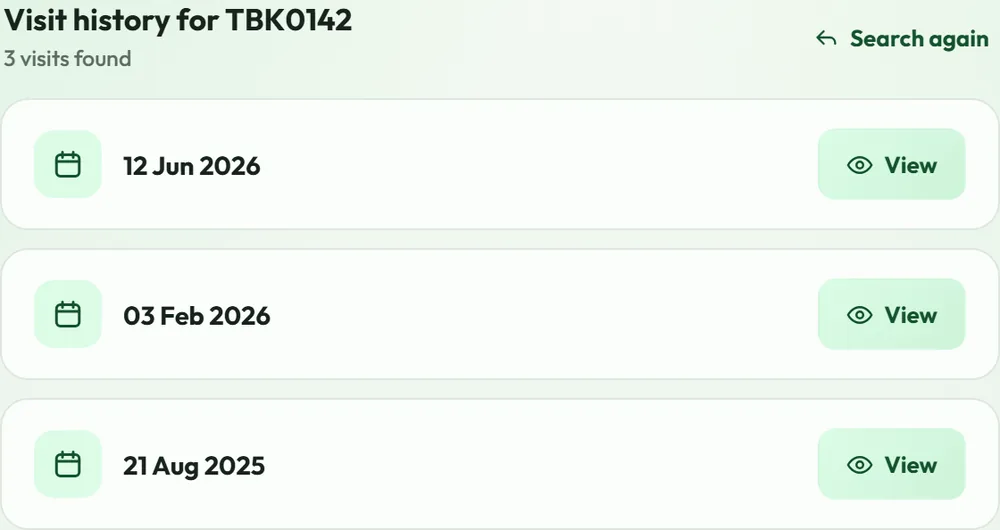
What tends to stay visible vs. what narrows
| Information | Typically visible to parents at any age |
|---|---|
| Upcoming appointments | Yes |
| Vaccination status & due dates | Yes |
| That a visit occurred | Yes |
| Growth chart / general health record | Usually, though this narrows with clinic policy as the patient gets older |
| Sensitive consult content (topics discussed one-on-one with the doctor) | Increasingly limited as the patient reaches adolescence |
See how a parent portal handles logistics and visit visibility.
Explore the parent portal featureWhat this means for clinic software
A parent portal built with only one access model — full visibility for a single guardian account — doesn't hold up across the full span of pediatric care. What works better is a system where access can be configured per patient as they age: full detail for a young child, and a more limited, logistics-focused view once the clinic and family agree it's appropriate for an older child. This isn't a feature most clinics think to ask about when first evaluating software, but it becomes relevant the moment a clinic's patients start aging into adolescence.
Frequently asked questions
Should parents have full access to a teenager's medical portal?
For young children, full parent access makes sense since the parent is managing all care decisions. As a child grows into a preteen and teenager, clinics increasingly move toward giving parents visibility into logistics — appointments, vaccination status, general visit history — while sensitive conversations stay between the doctor and the patient.
At what age should a pediatric portal start limiting parent access?
There's no single legal cutoff that applies everywhere, and clinics vary in their approach. Many begin adjusting access gradually around the preteen years and more clearly by mid-adolescence, aligning with when a teenager starts having some one-on-one time with the doctor during visits.
Does limiting parent portal access mean parents lose visibility into appointments and vaccinations?
No. Logistics — upcoming appointments, vaccination due dates, general visit occurrence — typically stay visible to parents regardless of age. What changes with a tiered approach is visibility into sensitive clinical detail, not basic scheduling and care coordination.
Can a parent portal support different access levels for the same family?
Yes — this is the point of a tiered access model: a young sibling's portal can show full detail to a parent while an older sibling's portal shows a more limited, age-appropriate view, all within the same clinic system.
See a parent portal built for the whole span of pediatric care.
Twenty minutes, real workflow, no script.
Book a walkthrough or chat with us on WhatsApp →